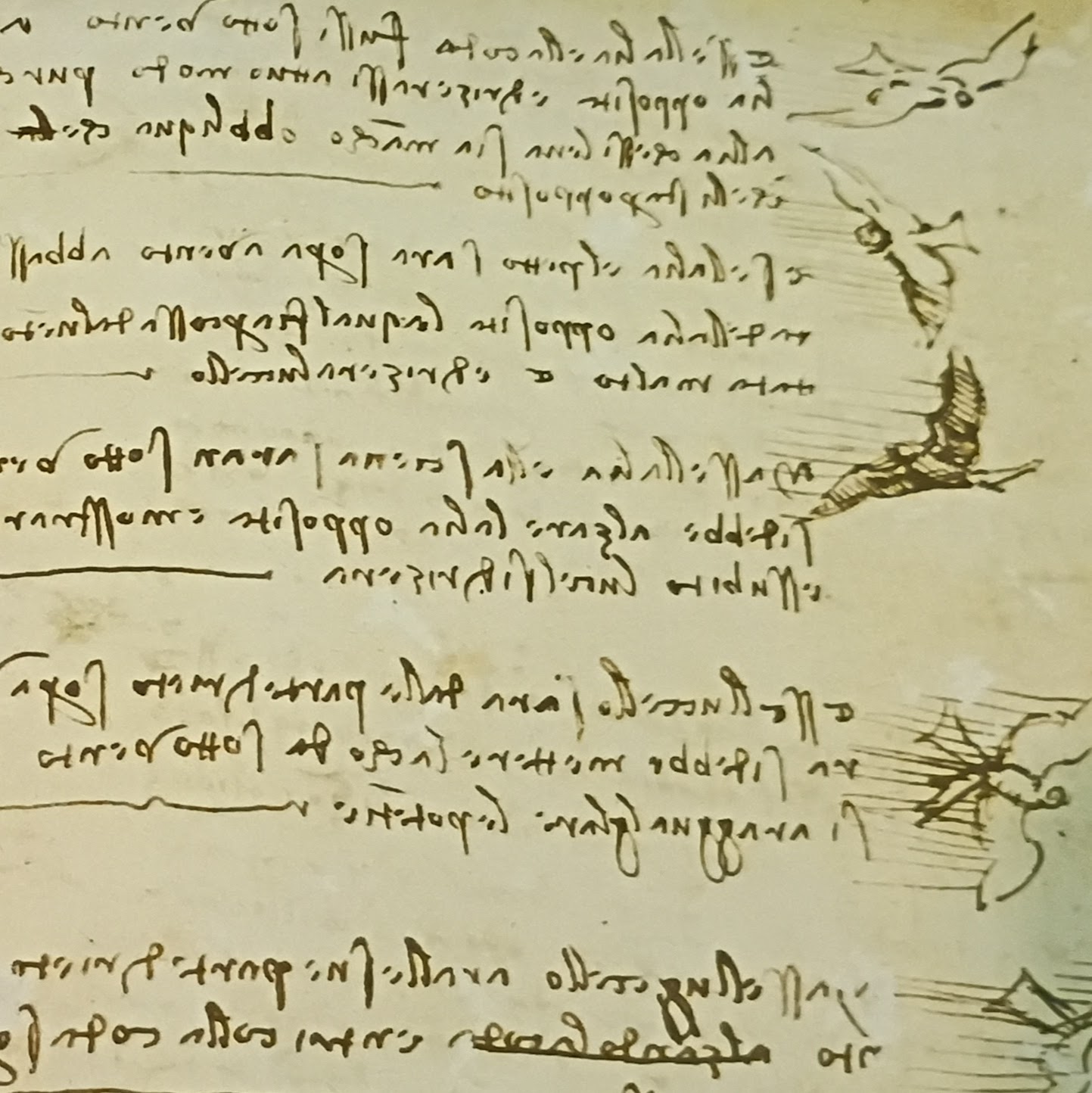
I recently had the opportunity to visit Vinci, the Tuscan village near Florence where Leonardo da Vinci was born. We all know him as the ultimate genius—a figure of infinite curiosity, boundary-pushing creativity, and a mind that refused to be contained by a single discipline or country. But during my trip, a piece of recent historical research completely blew my mind, permanently changing how I view his legacy.
The Mystery of Caterina
For centuries, the prevailing narrative cast Leonardo’s mother, Caterina, as a simple Tuscan peasant girl. But recent archival discoveries have unveiled a far more complex, heartbreaking reality. Documents unearthed in the State Archives of Florence—including an act of liberation signed by Leonardo’s own notary father—strongly suggest that Caterina was an enslaved young woman trafficked to Italy from the Caucasus region. While the intimate details of her relationship with her son remain lost to time, it is highly likely that Leonardo was, to some degree, exposed to a language and a worldview entirely foreign to his father’s Tuscan heritage. While I won’t go so far as to formally label the painter of the Mona Lisa a Third Culture Kid, it is entirely legitimate to look at his genius through a new lens—as a mind shaped, at least in part, at the vivid intersection of two distinct cultures.
What Exactly is a Third Culture Kid?
For those unfamiliar with the term, a Third Culture Kid (TCK) is an individual who spends a significant portion of their formative years living outside their parents’ passport culture.
The “first culture” is the home country of the parents. The “second culture” is the host country where the family lives. The “third culture” isn’t a specific geographic location; it’s the unique, shared lifestyle and mindset of being caught between worlds.
If you are an expat and your children have been raised across cultures, they are in fact Third Culture Kids.
The Hidden Competencies of Growing Up “Between Worlds”
If we allow ourselves this historical thought experiment, Leonardo’s early life beautifully mirrors a reality that modern research consistently validates: navigating multiple cultures builds an extraordinary set of high-level competencies.
Here is what the literature tells us about the unique skills global nomads bring into adulthood:
- Advanced “Context Reading”: Research describes TCKs as exceptional “cultural chameleons.” Because they have to adapt quickly to survive transitions, they develop an incredible capacity to read a room, pick up on unspoken social rules, and decode the subtle power dynamics of a new environment with unusual speed.
- High Cultural Intelligence: Studies show that individuals raised between cultures score remarkably high in open-mindedness and cultural empathy. They don’t view differences as foreign or threatening; they simply see them as alternative, equally valid ways of human patterning.
- Enhanced Creativity & Nonlinear Problem-Solving: Psychological research indicates that cross-cultural backgrounds inherently wire the brain for original thinking. When faced with a challenge, a TCK’s mind doesn’t just look for a local solution; it automatically views the problem from multiple geographic and philosophical angles.
- A Tolerant Relationship with Flux: Because change is a constant theme in their upbringing, adult TCKs often have a massive tolerance for ambiguity. Where others see chaotic disruption, they see an expected phase of transition, allowing them to remain deeply self-reliant and resilient when structural foundations shift.
But as Leonardo da Vinci showed us, when you learn to weave different worlds together, your perspective ceases to be linear. You begin to see connections where others see walls.
Whether you are a TCK yourself, raising global children, or navigating the deep waters of settling into a brand-new culture as an adult, remember this: the friction of living between worlds isn’t just a challenge to get through. It is the exact crucible that expands your emotional intelligence, sharpens your creativity, and allows you to build a life of profound, unshakeable self-reliance.
Cultivating the Dual-Culture Edge in Your Children
Guiding children through language nuances, differing cultural values, and identity questions can feel heavy. But remember: this exact intersection of two worlds is what forces a young mind to expand. Maybe our children won’t grow up to be geniuses like Leonardo, but here’s a few tips to help them thrive and get the best of their crosscultural position:
- Reframe a Dual Identity as an Asset: Your children don’t have to choose one side of themselves over the other. Teach them that standing firmly in two cultures is a superpower that allows them to see the world with twice the clarity.
- Encourage Broad-Minded Curiosity: Because your kids grow up experiencing different ways of thinking, speaking, and living, they naturally understand that there is never just one way to do things. Lean into this! Encourage them to see patterns, compare traditions, and celebrate both worlds.
- Honor Your Roots Openly: Keep the connection to your home country alive and vibrant through stories, food, language, and rituals. Your ability to love your origin while successfully building a life in a new land is their ultimate blueprint for resilience.
New Moon Reflection for the Week Ahead: Look at your children tonight and stop wondering if they belong to one country or the other. Instead, marvel at how beautifully they bridge both. You aren’t just raising children abroad; you are raising the visionaries of tomorrow.
Hi, I’m Cristina. As a European woman living in Colorado, I know firsthand what it takes to build a purposeful, fulfilling life abroad. I specialize in helping expat women navigate the transition and create a deep sense of belonging, wherever home happens to be. If you are ready to thrive starting today, click the button below to book your free call.
Join the List
Do you want to read more content like this? Sign up to receive weekly tips on resilience, building community and relocation success.
Leave a Reply